
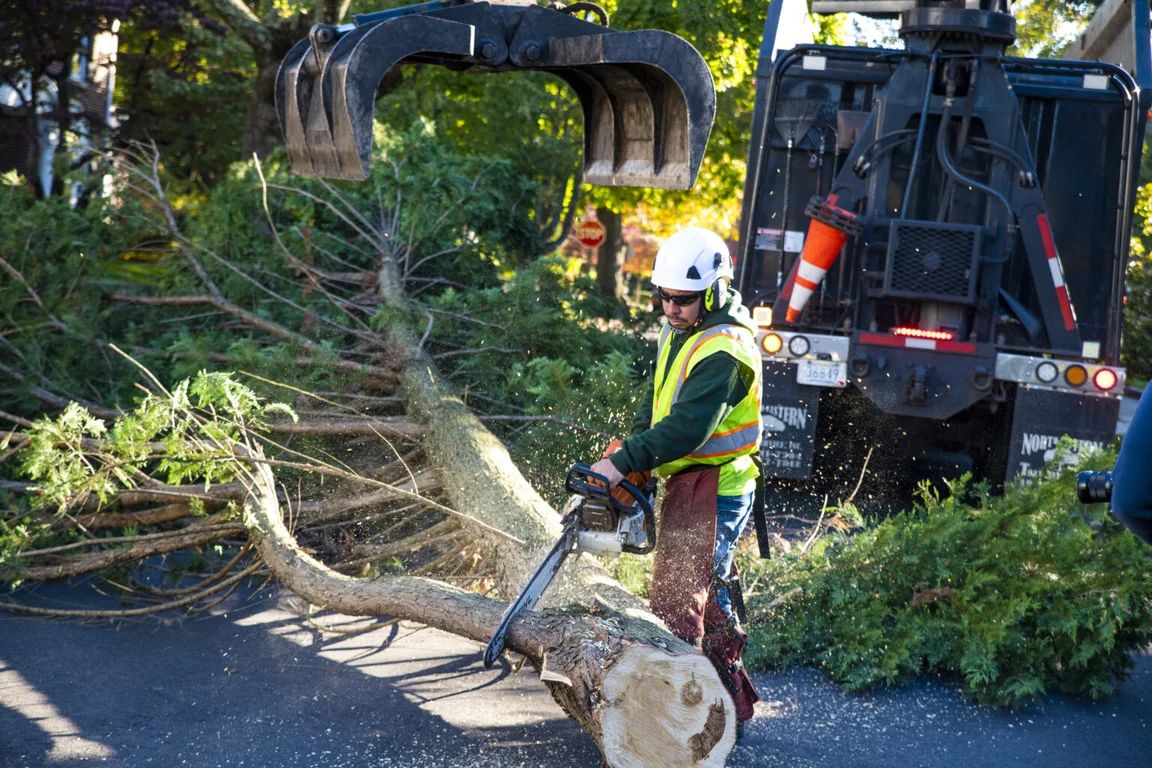
Keep what can stay. Plan carefully for what cannot.
Removal may be worth discussing when a tree is dead, badly damaged or in conflict with a necessary property change. A lean or thin canopy alone does not establish the cause or tell you whether removal is needed. Start with an on-site evaluation of the tree and the space around it.
Ask whether selective pruning or another care option can address the concern. If removal is recommended, have the provider explain why and what the quote includes.
The yard matters as much as the tree.
A narrow side gate, swimming pool, overhead line, alley or neighboring roof changes how the job can be approached. Share access widths and photos taken from the ground. Keep children and pets out of the work area, and do not move a damaged branch to improve a photo.
Compare the complete removal quote.
- The specific tree and work limits.
- Access arrangements and protection for paving, lawn and nearby planting.
- Removal of trunk sections, branches and other debris.
- Whether stump grinding is separate.
- Permit responsibility and any reinstatement work.
Read the local permission guide before authorizing work near streets or public trees.